How Charging Infrastructure Impacts EV Financing Decisions
Electric vehicles (EVs) are becoming an important part of India's changing transportation landscape. As more individuals, businesses and commercial operators consider electric mobility EV financing is also gaining importance. However financing an electric vehicle involves more than looking at the vehicle price loan amount or interest rate. Charging infrastructure is another factor that can influence the overall financing decision.
For an EV owner convenient and reliable charging can directly affect how easily the vehicle can be used every day. For commercial operators charging availability can influence vehicle utilisation, operating costs and income generation. Because of this understanding the charging ecosystem is becoming an important part of evaluating an EV before choosing financing.
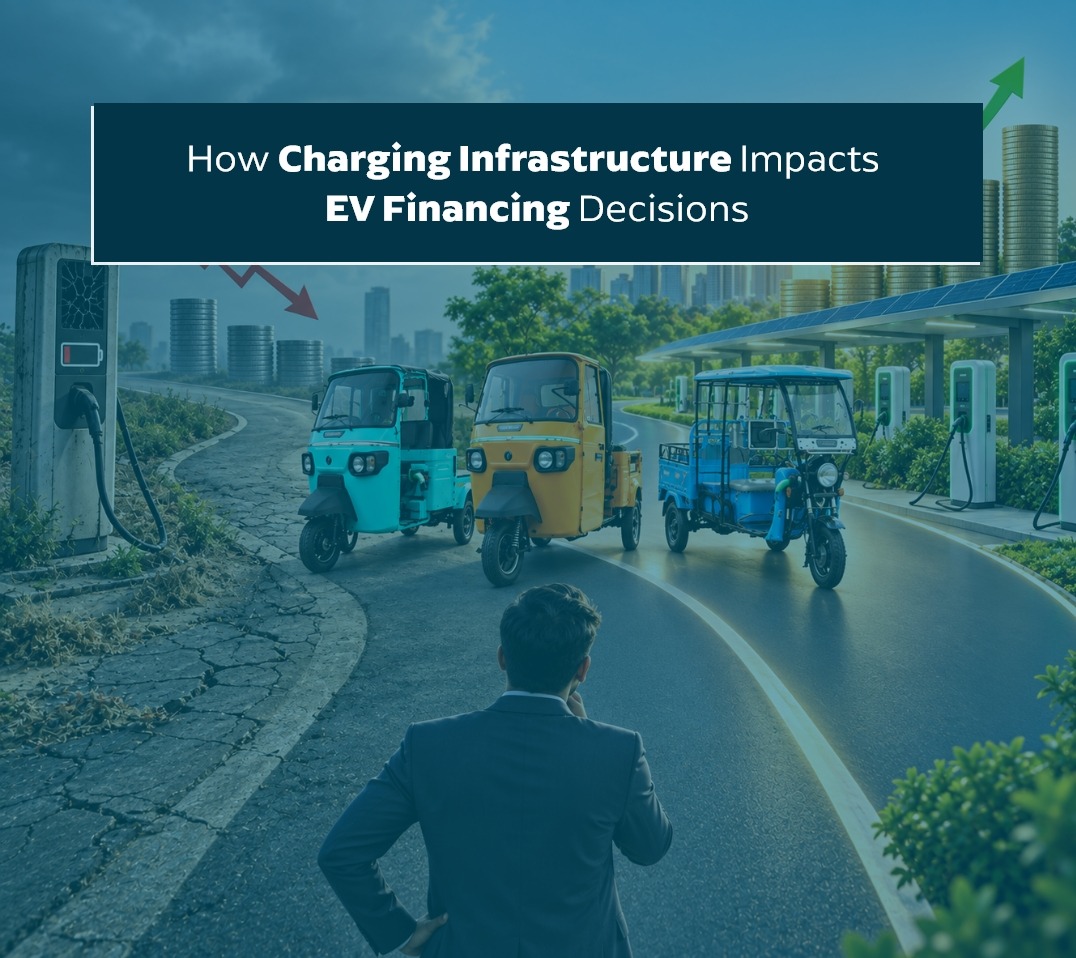
Why Charging Infrastructure Matters for EV Financing
Unlike conventional vehicles that depend on an established network of fuel stations, electric vehicles require access to suitable charging facilities. India's EV charging network is expanding but availability can still vary depending on the city, location and type of vehicle.
Before financing an EV, a buyer should understand where and how the vehicle will be charged. Home charging may be suitable for some private users while commercial EV operators may depend on depot workplace or public charging facilities.
The availability of charging can affect:
- Daily vehicle usage
- Charging time and downtime
- Energy expenses
- Travel planning
- Vehicle productivity
- Overall operating costs
These factors can ultimately influence whether an EV fits the buyer's financial and operational requirements.
Charging Infrastructure and EV Utilisation
Vehicle utilisation is particularly important for commercial EV financing. Electric three-wheelers delivery vehicles and fleet vehicles may be used for several hours every day. If charging is easily accessible operators can plan their routes and charging schedules more efficiently.
For example an electric three-wheeler used for passenger transportation may need to cover multiple trips during the day. If the operator has access to reliable charging at an appropriate location the vehicle can be managed more effectively around its operating schedule.
On the other hand limited access to charging may result in additional waiting time or changes to planned routes. For a commercial operator such downtime can affect daily productivity and earnings.
How Charging Availability Can Affect Financing Decisions
When evaluating an EV financing requirement the expected use of the vehicle is an important consideration. Charging infrastructure provides additional context about whether the vehicle can realistically support that intended usage.
A buyer may need to consider:
Daily distance: The expected travel distance determines how frequently the vehicle may need charging.
Charging location: Home workplace depot or public charging can have different levels of convenience and accessibility.
Charging time: The time required to charge the vehicle should fit into the user's daily schedule.
Operating expenses: Electricity costs form part of the vehicle's ongoing running expenses.
Vehicle utilisation: For commercial EVs charging availability can influence how consistently the vehicle can operate.
These considerations can help borrowers understand the practical economics of an EV before committing to finance.
Charging Infrastructure and Total Cost of Ownership
The financial cost of an EV does not end with its purchase price. Buyers also need to consider financing costs, electricity expenses, maintenance insurance and other operating costs.
Charging infrastructure can influence this total cost of ownership (TCO). Convenient charging can make energy planning easier and may reduce unnecessary travel to distant charging locations. For commercial users efficient charging arrangements can also help minimise operational downtime.
For example a business operating several electric vehicles may benefit from a structured depot-charging setup. This can allow charging to be incorporated into the daily operating schedule rather than relying entirely on public charging facilities.
Therefore when considering EV finance buyers should look at the complete operating model rather than focusing only on the initial vehicle cost.
Home Workplace and Public Charging
Different EV users may require different charging solutions.
Home Charging
Home charging can be convenient for users who have suitable parking and electrical infrastructure. Vehicles can often be charged during periods when they are not being used such as overnight.
Workplace Charging
Workplace charging can be useful for employees or business-owned vehicles that remain parked for several hours. It can provide an additional charging option without requiring a separate trip to a public charging station.
Depot Charging
For commercial fleets and electric three-wheelers depot charging can support structured vehicle operations. Vehicles can be charged when they return to the operating base.
Public Charging
Public charging stations provide an option for users who cannot rely entirely on private charging. However factors such as availability, location, charging speed and applicable charging costs should be considered.
The most suitable charging arrangement depends on the vehicle, daily usage pattern and operating location.
Why Charging Infrastructure Is Important for Electric Three Wheelers
Electric three-wheelers are increasingly being considered for passenger transportation, last-mile delivery and goods movement. Their financial viability can depend heavily on regular utilisation.
An operator financing an electric three-wheeler should consider whether charging facilities are available close to the vehicle's regular operating area. If charging is inconvenient the operator may need to spend additional time managing charging requirements.
Reliable charging access can make it easier to plan daily routes, operating hours and energy expenses. This can be particularly relevant when the vehicle is being used as an income-generating asset and the borrower has regular loan repayments.
Charging Infrastructure and Lender Considerations
From a financing perspective, charging infrastructure can provide useful information about the proposed use of an EV. A lender may consider the borrower's profile repayment capacity, vehicle type intended usage and other applicable financing criteria.
Charging availability may provide additional operational context particularly for commercial EV financing.
However, charging infrastructure is not the only factor involved in a financing decision. Credit history income, business activity repayment capacity, vehicle value and other lending parameters may also be considered.
How India's Growing Charging Network Can Support EV Adoption
The expansion of EV charging infrastructure can help address one of the practical concerns associated with electric mobility: access to convenient charging.
As charging facilities become more accessible across cities, highways, commercial areas and other locations EV users can have more options for managing their vehicles. Better charging access can also make it easier for businesses to plan EV-based operations.
For the financing ecosystem a developing charging network can support greater predictability around vehicle usage and operating expenses. This can help borrowers better understand the financial implications of switching to electric mobility.
What Should Buyers Check Before Financing an EV?
Before choosing EV finance buyers should evaluate the vehicle together with its charging requirements. Some important questions include:
- Where will the EV normally be charged?
- Is home or workplace charging available?
- Are public charging stations accessible along regular routes?
- Does the vehicle's range match the expected daily distance?
- What are the expected charging expenses?
- How much time will charging take?
- Can the expected vehicle usage support the monthly repayment?
Answering these questions can help buyers make a more informed financing decision and avoid operational challenges after purchasing the vehicle.
How AMU Supports the Changing EV Financing Landscape
The growth of electric mobility is creating new opportunities as well as new considerations for vehicle financing. At AMU understanding the changing requirements of EV users is important as businesses and individuals increasingly explore electric vehicles.
Charging infrastructure, vehicle utilisation operating costs and repayment capacity are interconnected factors that can help borrowers evaluate whether an EV fits their requirements.
As India's electric mobility ecosystem continues to develop financing solutions will remain an important part of enabling more customers and businesses to adopt EVs.
Conclusion
Charging infrastructure has become an important consideration in EV financing decisions. The availability location and accessibility of charging facilities can influence vehicle utilisation, operating costs downtime and the overall economics of electric vehicle ownership.
For private buyers as well as commercial operators evaluating charging requirements before taking finance can provide a clearer understanding of the long-term financial commitment. For electric three-wheelers and other commercial EVs reliable charging can be particularly important because daily utilisation may be directly connected to income generation.
As India's EV charging ecosystem continues to expand, understanding the relationship between charging infrastructure and EV financing can help borrowers make more informed decisions about electric mobility.
FAQs
1. How does charging infrastructure affect EV financing decisions?
Charging infrastructure can influence an EV's daily usability operating costs, vehicle utilisation and overall financial viability. Convenient charging can make it easier for borrowers to manage the vehicle and its running expenses.
2. Why is charging availability important for commercial EVs?
Commercial EVs often operate for several hours each day. Reliable charging access can help reduce unnecessary downtime and support consistent vehicle utilisation, which can be important for income-generating vehicles.
3. Does charging infrastructure affect the total cost of owning an EV?
Yes. Charging access can influence electricity expenses, travel requirements, charging time and operational downtime. These factors should be considered along with financing maintenance and insurance costs when evaluating the total cost of ownership.
4. What type of charging should buyers consider before financing an EV?
Buyers should consider whether home workplace depot or public charging best matches their daily usage. The appropriate option depends on the vehicle type, travel pattern, parking arrangements and availability of charging facilities.
5. What should buyers check before taking EV finance?
Buyers should consider the vehicle's range, daily travel distance, charging availability, expected running costs utilisation and repayment capacity before choosing EV financing.